




For more than two decades, NBA 2K has redefined what it means to play a sports video game. Each new release pushes closer to replicating the real NBA, with lifelike animations, evolving AI, and game modes that mimic the highs and lows of a professional career.
Yet even with all that progress, the experience has always been limited to a screen and a controller.
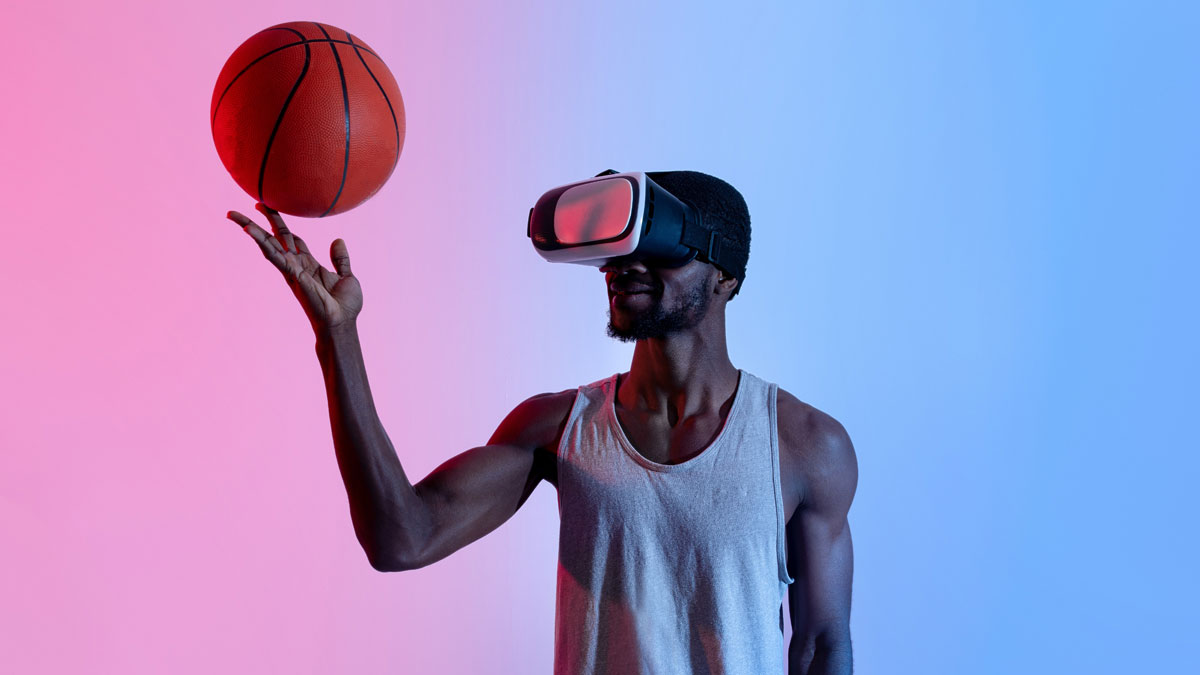
Now imagine putting on a headset and stepping into the arena itself. Virtual reality promises to do just that, transforming NBA 2K from a polished simulation into a fully lived experience.
The future of basketball gaming might not be on your couch, but still inside your living room.
From Controllers to Courtside: How VR Changes the Experience
Traditional gameplay gives us control, but VR offers presence. It takes the act of pressing buttons and turns it into motion, perspective, and emotion.
Picture settling into a courtside seat in a virtual arena, hearing sneakers squeak on polished hardwood, and catching the frustrated sigh of a player after a missed shot. Now flip that angle. Imagine yourself on the free-throw line with a roaring crowd behind you, shoulders tensed, hands tracking your actual motion as you release the ball.
The NBA has already experimented with this through VR broadcasts. Fans using headsets on platforms like Meta Quest can watch games in 180-degree views or even join virtual watch parties. If NBA 2K fully adopted these immersive layers, the game would shift from simply replicating basketball to making players feel like they’re living it.
The Evolution of Realism in NBA 2K
NBA 2K has long been defined by its chase for authenticity, with each release moving closer to replicating the real NBA. VR represents the natural next step in this journey toward immersion.
Advances in Animation and AI
Recent innovations like the ProPLAY Motion Engine showcase the franchise’s commitment to lifelike play. By translating actual NBA footage into in-game movements, animations look less like simulations and more like clips from a live broadcast. Smarter coaching AI and dynamic footwork only heighten that sense of realism, setting the stage for VR to expand what feels possible.
Player Feel vs. Player Control
Currently, every dunk, crossover, or spin move is triggered by a flick of the stick or a button combo. It’s satisfying, but it’s abstract. VR offers something different: the ability to physically perform the move. Shooting could involve raising your arms and releasing a virtual ball. Defense might require lateral slides across your actual living room floor.
This is where the bridge between game and league feels strongest. Just as fans speculate on how new rosters or draft picks will impact the season, NBA 2K players could use VR to test those combinations in-game.
The same curiosity that fuels conversations around NBA futures, including which teams look poised for deep playoff runs, could also drive fans to experiment with lineups and strategies inside a VR-powered NBA 2K.
Reimagining NBA 2K Game Modes in Virtual Reality
Adding VR isn’t just about new mechanics; it could reshape the very heart of NBA 2K’s most popular modes.
MyCAREER: Living the Dream in First Person
MyCAREER has always been about the fantasy of becoming an NBA star. With VR, that journey gets more personal.
Instead of reading a cutscene or watching dialogue unfold, you’d make eye contact with coaches, respond to reporters’ questions in press conferences, or feel the tunnel jitters before a playoff game. The emotional stakes would rise because you’re not just guiding a player; they’re your avatar.
The City: A Virtual Basketball Community
The City has become a social hub where players gather, compete, and show off achievements. In VR, it could evolve into a digital neighborhood you physically walk through.
Picture exploring parks, meeting and conversing with other players in real time, or spectating games as if you were leaning against the fence at a local court. It’s not just playing a mode; it’s being part of a community.
MyNBA: Courtside GM Decisions
Franchise mode could also take on new life. Imagine evaluating draft prospects at a VR scouting combine or negotiating contracts inside a sleek virtual office.
During games, you could watch from a courtside perspective, gesturing to call plays or tracking your team’s execution as though you were a coach pacing the sideline.
Beyond Gaming: How VR Mirrors the Real NBA
NBA 2K wouldn’t be moving into uncharted waters. The league itself is already embracing VR to connect with fans and players alike.
Platforms like NBA Arena and Xtadium allow viewers to attend games virtually, complete with interactive environments and licensed team apparel for avatars.
Teams have begun using VR for training and rehabilitation, creating scenarios that simulate defensive schemes or help athletes recover from injuries without physical strain.
Even broadcasters experiment with VR analysis, breaking down plays from a first-person perspective.
For 2K players, this crossover reinforces a simple truth: VR isn’t just a “what if.” It’s already influencing how the sport is consumed, analyzed, and taught. A VR-enabled NBA 2K would only be an evolution of trends already shaping the league.
Challenges on the Way to Full VR Integration
Of course, the dream doesn’t come without hurdles. Hardware cost remains a major barrier, as not every player owns or can afford a headset.
Motion tracking must also feel fluid, avoiding the lag or clunkiness that could ruin immersion. Developers would also need to balance stamina mechanics; running in your living room isn’t the same as running on an NBA court.
Competitive play raises additional questions. Would VR modes be integrated into NBA 2K esports tournaments? How do you ensure fairness when players might have different setups? Accessibility must remain a priority, ensuring VR enhances the experience without replacing traditional controller-based play.
Living the NBA Experience From Home
VR won’t eliminate the NBA 2K we know today. Controllers, traditional broadcasts, and familiar modes will always have their place. Yet VR opens a new lane, one that transforms the game into an experience that feels both personal and social.
It’s not hard to imagine a future where fans flip between watching a live NBA game in VR, then stepping into NBA 2K to recreate that same matchup minutes later. It’s a vision of basketball where the boundaries between watching, playing, and living blur.
The NBA has always been about more than the scoreboard; it’s about atmosphere, community, and the thrill of the moment. Virtual reality could bring all of that into your living room, redefining what it means to play NBA 2K.
Sponsored Article